
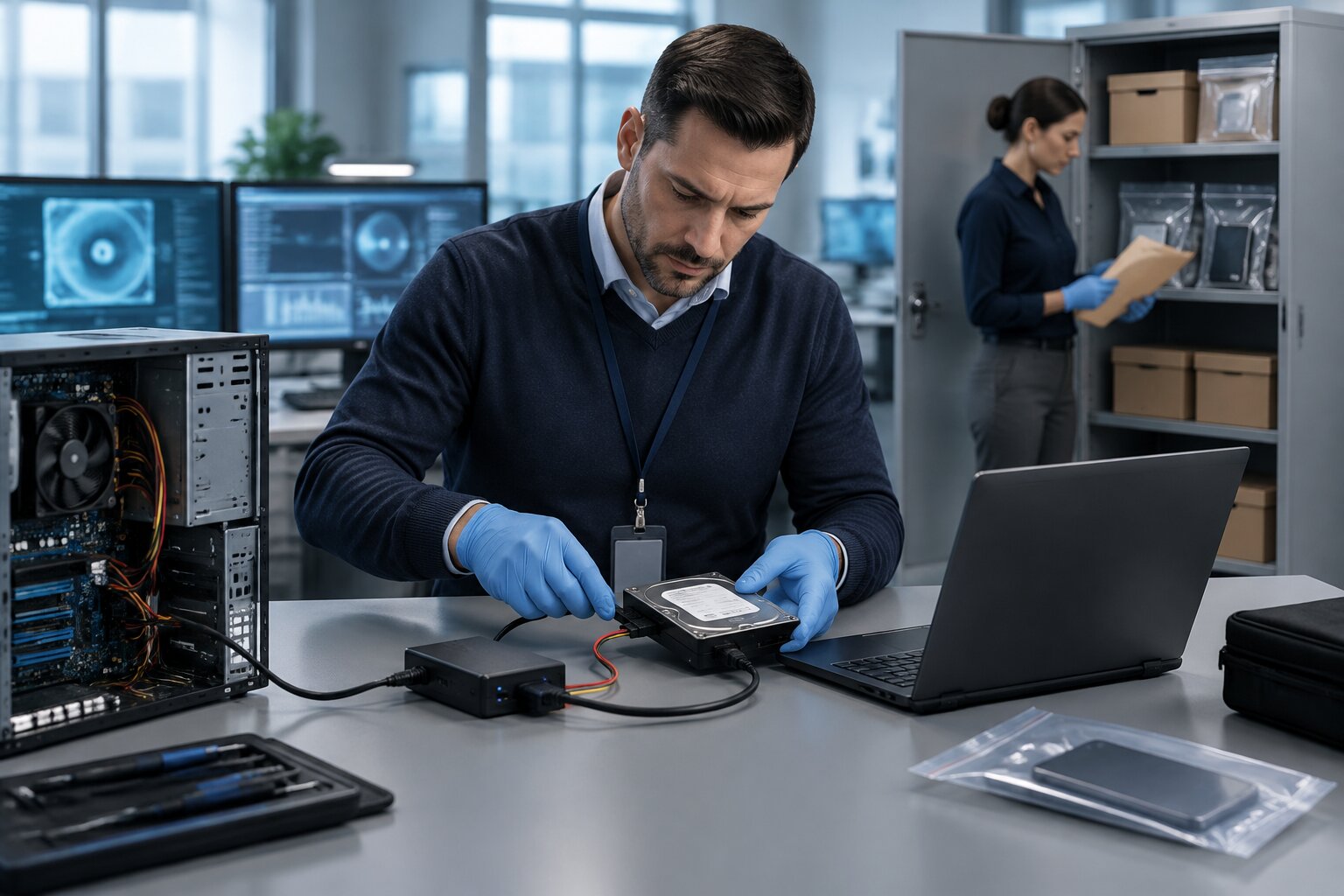
Employee transitions can put proprietary information at risk, particularly when departing staff retain access to business devices, email, and cloud systems. For companies in Clayton and St. Louis, computer and smartphone forensics can help establish what happened, identify relevant digital records, and preserve evidence for corporate disputes.
Global Intelligence Consultants (GIC Agency), based in Clayton, Missouri, provides computer and smartphone forensic services to help clients examine digital evidence. Its specialists analyze devices and software, extract available data, and explain findings to clients and their legal teams.
For general counsel, chief information security officers, and business owners, the priority is not simply to search a departing employee’s device. It is to coordinate a lawful, documented investigation that protects relevant records while addressing ongoing security concerns.
Key Takeaways
- Employee departures and role changes warrant careful coordination among legal, IT, HR, and security teams, during Q4 and throughout the year.
- Computer and smartphone forensics can help reconstruct activity involving files, communications, and account access.
- Relevant evidence may exist across laptops, mobile devices, email platforms, cloud services, and business-system logs.
- Deleted-data recovery is not guaranteed. Results depend on the device, encryption, available records, and how the evidence has been handled.
- Preservation and access restrictions should be coordinated so that routine offboarding does not unnecessarily destroy information relevant to the investigation.
Why Do Employee Transitions Deserve a Digital Security Review?
A departing employee may have legitimate access to sensitive information until their employment ends. If a concern arises about unauthorized copying, sharing, or retention of company data, investigators need to distinguish permitted work activity from conduct that may violate company policy or legal obligations.
Year-end transitions can add scheduling pressure when departures, contract changes, and holiday absences overlap. However, suspected data theft should be assessed on the evidence in the individual case, not on the assumption that Q4 departures are inherently suspicious.
What Makes an Employee Departure Difficult to Investigate?
Relevant activity may span several systems. A file could be accessed on a laptop, synchronized through a cloud service, and discussed in a mobile message. Reviewing only one source may leave important gaps in the timeline.
Routine offboarding can also change the available evidence. Devices may be reassigned, accounts deleted, or logs allowed to expire before legal and investigative teams have assessed their relevance.
What Evidence Can Be Overlooked?
Potentially relevant records include file metadata, email attachments, cloud audit logs, messaging data, and traces of device or account activity. Deleted material may also be recoverable in some circumstances, but its availability should never be assumed.
A record showing that a file was accessed or transferred does not, by itself, establish theft or intent. Examiners must interpret technical findings alongside the employee’s duties, authorized access, company policies, and other case evidence.
Where Can Digital Evidence Be Found?
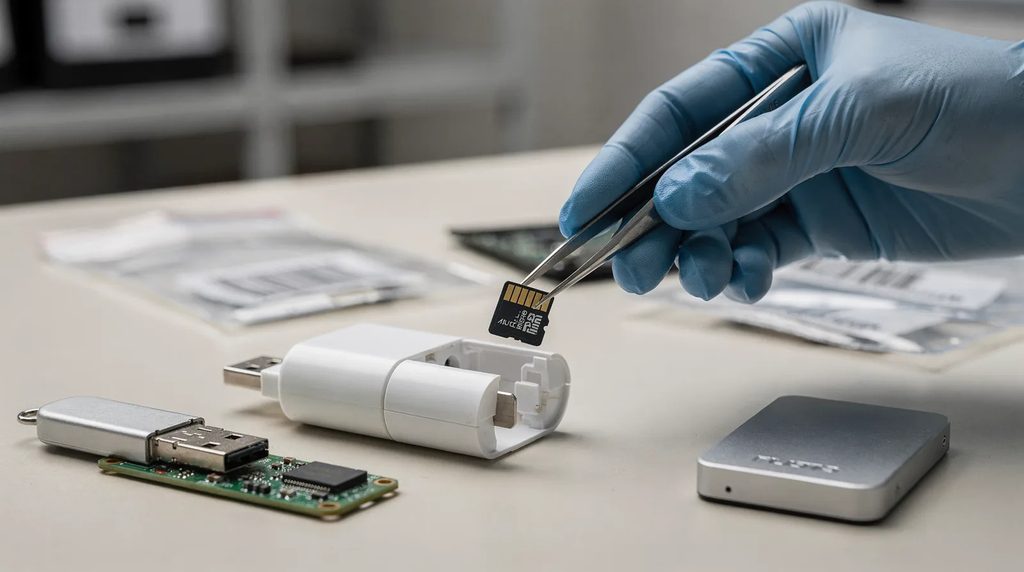
Digital evidence is not confined to visible documents on a desktop. Relevant information may appear in application data, file histories, backups, cloud records, and system logs, depending on what the organization retains and what investigators are authorized to examine.
A corporate investigation may require records from multiple sources to build a coherent account of events. Comparing timestamps, communications, and account activity can help clarify when information was accessed, whether it was transferred, and which questions remain unresolved.
What Can Computer and Smartphone Forensics Reveal?
Forensic examiners use structured methods to preserve, acquire, examine, and analyze digital information. Depending on the available evidence, that work may help identify:
- Relevant files, messages, email attachments, and other communications.
- Recoverable deleted data or remnants of previous activity.
- File metadata and timestamps useful for reconstructing events.
- Indicators of file copying, synchronization, or transfer.
- Account activity that warrants comparison with authorized business use.
A review of company hardware and relevant digital records can help establish a factual timeline. What can be recovered depends on the source, device configuration, encryption, retention settings, and whether data has been overwritten or otherwise made inaccessible.
Which Devices and Systems May Need Examination?
- Company-issued laptops and desktop computers.
- Business smartphones and tablets.
- Corporate email and collaboration platforms.
- Cloud storage accounts and available audit logs.
- Shared drives, removable media, and relevant endpoint records.
- Personal devices or accounts only where appropriate legal authority and authorization exist.
Businesses searching for “cell phone forensics near me” should consider more than proximity. The provider should be able to explain the scope of examination, preservation requirements, access limitations, and how findings will be documented.
Global Intelligence Consultants provides computer and smartphone forensic services, including digital analysis, data extraction, and support explaining findings in legal proceedings.
How Should Legal Teams Preserve Digital Evidence?
Prompt action matters, but preservation must be coordinated with incident containment. Legal, IT, HR, and forensic personnel should identify the relevant systems, assess ongoing risks, and determine how to protect records without making unnecessary changes to potential evidence.
Do not treat a device reset, account deletion, or remote wipe as a routine step when the device or account may contain evidence. At the same time, an active security concern may require immediate access restrictions. The response should account for both needs rather than follow a rigid sequence in every case.
What Should the Initial Response Include?
A coordinated response generally addresses the following priorities:
- Define the concern. Identify the people, events, information, and timeframes relevant to the suspected misconduct.
- Map potential evidence sources. Locate relevant devices, accounts, communication platforms, logs, and backups.
- Coordinate containment and preservation. Determine appropriate access restrictions and preservation measures with legal, IT, and forensic personnel.
- Confirm examination authority. Establish what the organization is authorized to collect and review, particularly for personal devices or accounts.
- Arrange documented collection. Engage qualified personnel to preserve and acquire relevant evidence using appropriate methods.
- Maintain handling records. Document collection, custody, transfers, and examination activity so the evidence can be evaluated later.
Avoid manually exploring a suspect device or experimenting with recovery software before obtaining forensic guidance. Unplanned handling can change records or complicate later interpretation.
Why Does Chain of Custody Matter?
Chain-of-custody documentation records who handled evidence, when it was transferred, and how it was managed. Alongside appropriate collection methods and technical documentation, it helps others evaluate the integrity of the investigative process.
Documentation does not guarantee admissibility or prove misconduct. It supports a transparent account of how findings were obtained and allows counsel to assess their use in a dispute.
Who Should Corporate Counsel Contact?
Corporate counsel should look for investigators who can connect technical examination with the questions the case needs to answer. That includes explaining the limits of recovery, identifying additional evidence sources, and reporting findings without overstating what the data proves.
GIC Agency works with clients and partner law firms on matters involving computers, tablets, and smartphones. Its broader investigative work can provide context when digital findings need to be considered alongside other facts.
If your organization suspects unauthorized data access or copying, contact Global Intelligence Consultants to discuss the matter and your forensic needs. Provide a description of the concern and available systems without making unnecessary changes to the potential evidence.
Frequently Asked Questions
Why Should Businesses Review Digital Security During Employee Transitions?
Departures and role changes can affect access to sensitive information and the availability of relevant records. A coordinated review helps organizations manage access, retain necessary evidence, and investigate specific concerns without assuming that a departing employee has acted improperly.
What Evidence Can Smartphone Forensics Uncover?
Depending on the device and available data, an examination may identify messages, call records, application data, files, and other relevant artifacts. Some deleted information may be recoverable, but encryption, overwriting, and device configuration can limit results.
Where Should Clayton and St. Louis Businesses Look for Relevant Digital Evidence?
Potential sources include business computers, smartphones, corporate email, cloud storage, collaboration platforms, shared drives, and retained logs. The appropriate scope depends on the incident, available records, and authority to examine each source.
Can Investigators Recover Every Deleted File or Message?
No. Recovery depends on factors such as encryption, storage behavior, overwriting, backups, and the acquisition methods available. A qualified examiner should explain what can be assessed and distinguish recovered evidence from information that is unavailable.
Can a Company Examine an Employee’s Personal Phone?
Ownership of company data does not automatically authorize unrestricted access to a personal phone. Counsel should assess consent, applicable policies, legal obligations, and any necessary legal process before collection or examination.
How Global Intelligence Consultants Can Help With Corporate Data Theft Investigations
Suspected corporate data theft requires a clear account of what occurred, not assumptions based on an employee’s departure or a single technical indicator. Global Intelligence Consultants supports clients in Clayton and St. Louis with digital forensic analysis and investigative services designed to develop relevant facts.
Through its computer and smartphone forensic services, GIC Agency can help clients:
- Examine relevant hardware, devices, and software.
- Extract available data using specialized forensic applications.
- Assess potentially recoverable deleted, encrypted, or damaged files, subject to technical limitations.
- Analyze findings in the context of the investigation.
- Explain forensic discoveries and provide testimony support when appropriate.
When a matter extends beyond the digital records, the firm’s broader investigation services can help legal teams evaluate related facts and unanswered questions.
If your business is facing a disputed departure, suspected unauthorized data transfer, or an employment-related digital evidence issue, contact Global Intelligence Consultants for a confidential discussion about the scope of the matter and the forensic support required.
This article provides general information, not legal advice. Evidence collection, employee privacy, and access to devices or accounts should be reviewed with qualified counsel.