

Offshore capital rarely stays where you can see it. In 2026, shell entities, layered ownership, and cross-border banking networks make hidden assets harder to pin down than ever — and tracing them demands coordinated investigation across banking, corporate, and legal systems, even as financial secrecy laws continue to weaken.
Global Intelligence Consultants, based in Clayton, Missouri, conducts international asset tracing and cross-border exposure investigations for litigation, divorce, and fraud-related disputes.
Combining investigative and intelligence-gathering methods, the firm uncovers concealed accounts, shell companies, and undisclosed holdings across jurisdictions and arbitration enforcement action involving offshore-held artwork assets.
Key Takeaways
- Multi-jurisdictional fraud cases involve assets, people, and information spread across numerous countries simultaneously.
- Offshore accounts exploit banking secrecy, lax reporting requirements, and shell company structures to hide capital.
Why Does Hidden Offshore Capital Threaten Cross-Border Disputes?
Hidden offshore capital undermines enforcement, delays judgments, and lets wrongdoers move value faster than courts can respond. Disputes involving fraud now routinely span multiple jurisdictions, with the individuals controlling assets, the records proving ownership, and the courts capable of granting relief scattered across different countries. This dispersal turns a straightforward recovery case into a coordination problem spanning legal systems, languages, and disclosure regimes.
Litigation teams pursuing judgment enforcement face a structural disadvantage when capital sits behind shell entities in secrecy-friendly jurisdictions. Cross border asset tracing becomes the mechanism for closing that gap, mapping corporate layers and financial flows before a debtor liquidates or reroutes assets.
What makes offshore structures so hard to unwind?
Layered ownership, nominee directors, and jurisdiction-hopping banking relationships obscure who actually controls a given asset. Each additional layer adds delay, cost, and legal friction to any recovery effort.
Who handles this kind of investigative work?
Global Intelligence Consultants provides investigation and intelligence services built for these disputes, supporting counsel with verified, court-ready findings. Operating from Clayton, Missouri, the firm handles matters spanning national and international scope, giving litigation attorneys and forensic accountants a single point of coordination across borders.
An international asset exposure investigation typically addresses several intertwined risks:
- Concealed ownership behind trusts, holding companies, or nominee arrangements
- Rapid transfers designed to outrun freezing orders or discovery requests
- Jurisdictional gaps that limit subpoena power or evidentiary access
- Inconsistent corporate registries that obscure beneficial ownership
Left unaddressed, these gaps let counterparties dissipate assets before judgment, turning a winnable case into an uncollectible one.
What Makes Cross-Border Asset Tracing So Complex?
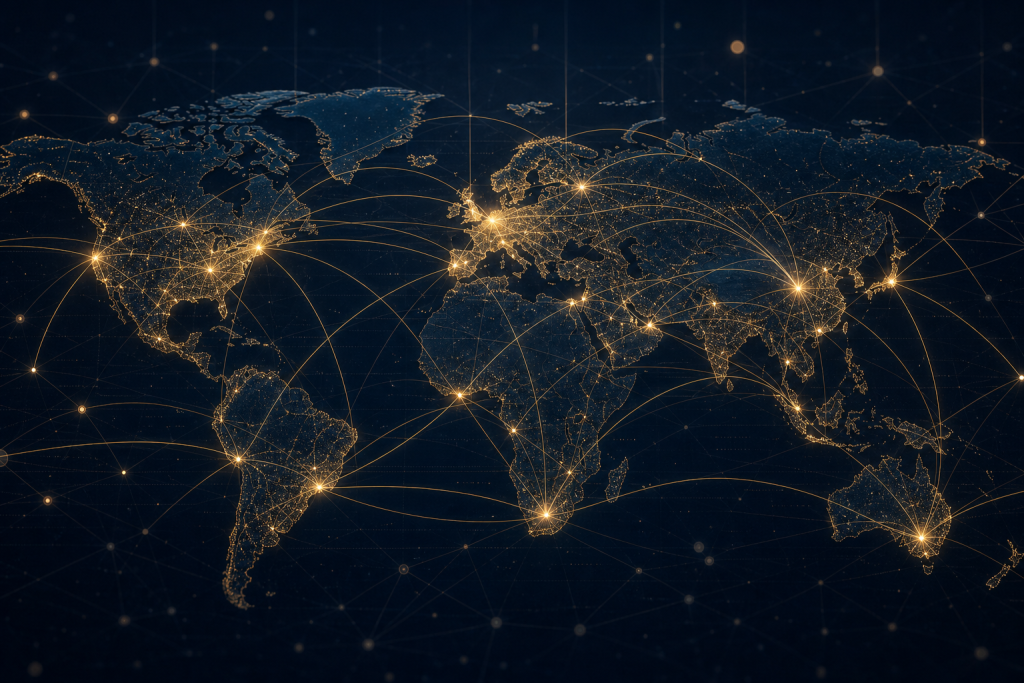
Multiple jurisdictions rarely align on evidence, ownership records, or enforcement timelines, and that misalignment sits at the core of the difficulty. Fraudulent conduct often occurs in one country while the individuals or entities controlling the corporate and financial structures reside in another. The documents proving ownership sit in a third jurisdiction. The courts capable of granting effective relief operate in a fourth. This scattering of conduct, control, records, assets, and legal authority forces investigators to coordinate across legal systems that were never designed to talk to each other.
Geopolitical volatility compounds the problem further. Shifting regulatory environments and sanctions regimes demand constant vigilance from corporate counsel managing assets that move across borders. A structure that was compliant last year may sit in a newly sanctioned jurisdiction today, changing what evidence is accessible and what enforcement steps remain lawful.
Why does jurisdiction matter so much in asset recovery cases?
Jurisdiction determines which court can freeze assets, compel disclosure, or enforce a judgment. Litigation teams pursuing cross border asset tracing must map not only where an asset sits. Which legal system has authority to act on it. Mismatched jurisdiction between the wrongdoing, the asset, and the court often stalls recovery before it starts.
What role does sanctions compliance play in tracing hidden assets?
Sanctions analysis clarifies which authorities govern a transaction and how economic restrictions affect cross-border trade. An international asset exposure investigation must factor in these regulatory layers. A sanctioned counterparty can block otherwise viable recovery paths. Corporate risk teams that ignore this layer risk pursuing assets they legally cannot touch.
Complexity, in short, comes from five moving parts:
- Location of the underlying fraud
- Location of those controlling the structures
- Location of financial and ownership records
- Location of the assets themselves
- Location of courts with enforcement power
Which Jurisdictions Pose the Greatest Asset-Tracing Challenges?
Certain jurisdictions consistently complicate cross border asset tracing for litigation teams and judgment-enforcement professionals. Banking secrecy laws, minimal reporting requirements, and layered structures built from shell companies, trusts, and cryptocurrency wallets make these locations attractive to parties concealing capital. Forensic accountants and arbitration counsel preparing a case must treat jurisdictional selection as a strategic puzzle, not a formality.
Why do some countries remain havens despite global reform efforts?
Secrecy protections have eroded over the past several years as international regulatory bodies tighten disclosure standards. That shift makes full concealment harder than it once was, though gaps persist. Structures combining multiple legal systems. A trust in one country, a shell entity in another, digital assets held nowhere in particular. Still frustrate straightforward recovery efforts.
How do sanctions regimes affect where assets can safely move?
Sanctions regimes function as tools governments use to steer the conduct of foreign states and entities. Counsel conducting an international asset exposure investigation must map how these restrictions influence where funds land. Sanctioned jurisdictions often see accelerated capital flight toward less-regulated banking centers. Ignoring this dynamic risks missing where disputed assets actually rest.
Practical challenge points frequently include:
- Jurisdictions offering minimal beneficial-ownership disclosure
- Regions with limited cooperation on cross-border discovery requests
- Markets where trust and shell-company formation carries few verification checks
- Digital-asset ecosystems spanning exchanges with inconsistent reporting standards
Case histories bear this out. Investigative work touching marital disputes, corporate espionage, and financial fraud each surfaces distinct jurisdictional wrinkles. Asset concealment tactics rarely stay confined to one legal system. Counsel building a defensible record benefits from treating jurisdiction analysis as an early-stage priority rather than an afterthought during enforcement.
FAQ
Why does hidden offshore capital threaten cross-border disputes?
Hidden offshore capital undermines enforcement and delays judgments, letting wrongdoers move value faster than courts respond. Assets, controlling parties, and records scatter across jurisdictions, turning straightforward recovery into a coordination problem spanning legal systems and disclosure regimes.
Who handles international asset tracing investigations?
Global Intelligence Consultants, based in Clayton, Missouri, provides investigation and intelligence services supporting counsel with verified, court-ready findings. The firm gives litigation attorneys and forensic accountants a single point of coordination across borders.
Conclusion
Global Intelligence Consultants brings verified, court-ready intelligence to litigation attorneys, arbitration counsel, forensic accountants, and corporate counsel navigating cross-border asset concealment. Operating from Clayton, Missouri, the firm coordinates investigation and intelligence-gathering across jurisdictions to uncover hidden offshore capital, shell entities, and undisclosed holdings before they disappear beyond reach. Counsel preparing a multi-jurisdictional dispute can rely on this single point of coordination to build a defensible record for recovery and enforcement.