
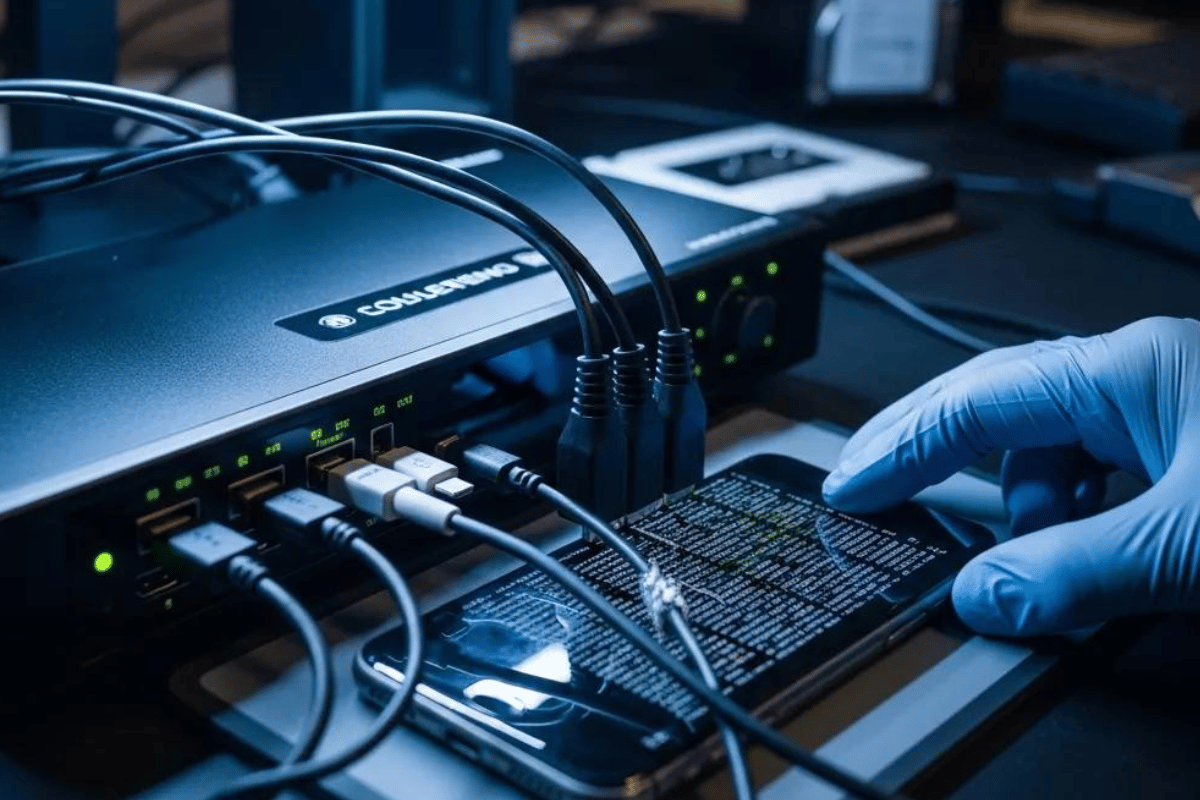
As the legal landscape evolves, the integration of digital forensics into litigation has become increasingly vital. In 2026, law firms and corporations are harnessing e-evidence to enhance their case strategies and outcomes.
This article explores the latest techniques in e-evidence collection, the impact of digital forensics on litigation outcomes, and the essential tools that support these processes. Readers will gain insights into how digital forensics can improve legal credibility and facilitate early resolutions, ultimately leading to more favorable litigation results.
Latest E-Evidence Collection Techniques
The field of digital forensics is rapidly advancing, with new techniques emerging to enhance e-evidence collection. These methods are crucial for ensuring that the evidence gathered is both reliable and admissible in court.
The integration of artificial intelligence (AI) into e-evidence collection processes has revolutionized how data is analyzed and interpreted.
AI tools can sift through vast amounts of data quickly, identifying relevant information that may be critical to a case.
Furthermore, maintaining a strict chain of custody is essential to uphold the integrity of the evidence collected, ensuring that it remains unaltered from the moment of acquisition to its presentation in court.
Case Studies and Impact on Litigation Outcomes
Real-world applications of digital forensics in litigation demonstrate its significant impact on case outcomes. For instance, corporate investigations often rely on digital forensics to uncover evidence of wrongdoing, which can be pivotal in legal proceedings. Expert witness testimony derived from digital forensic analysis can enhance the credibility of a case, providing judges and juries with clear, data-driven insights. These case studies highlight how effective use of e-evidence can lead to favorable settlements or verdicts, underscoring the importance of integrating digital forensics into legal strategies.
Overall Impact on Litigation Outcomes
The overall impact of e-evidence on litigation outcomes is profound. By enhancing the credibility of claims, digital forensics can facilitate early resolutions, saving time and resources for all parties involved.
Moreover, the use of e-evidence supports compliance with regulatory standards, which is increasingly important in today’s legal environment.
As law firms and corporations continue to adopt these technologies, the ability to present compelling, data-backed arguments will likely become a standard expectation in litigation.
What Are the Latest E-Evidence Collection Techniques in Litigation?
In 2026, the latest e-evidence collection techniques encompass a variety of digital forensics branches, including computer forensics, mobile device forensics, and cloud forensics. These specialized areas focus on extracting and analyzing data from different sources, ensuring comprehensive coverage of potential evidence.
The integration of AI in these processes allows for more efficient data analysis, enabling legal teams to identify critical information faster.
Additionally, meticulous documentation of the chain of custody is essential to maintain the integrity of the evidence throughout the litigation process.
How Do Digital Forensics Tools Ensure Integrity in E-Evidence Collection?
Digital forensics tools play a crucial role in ensuring the integrity of e-evidence collection. These tools utilize controlled acquisition methods that prevent data alteration during the collection process.
For instance, hashing techniques are employed to create a unique digital fingerprint of the data, allowing for verification that the evidence remains unchanged.
Furthermore, secure storage solutions are implemented to protect the collected data from unauthorized access, ensuring that it can be reliably presented in court.
What Are Best Practices for Chain of Custody Compliance in 2026?
Maintaining a proper chain of custody is vital for compliance in e-evidence collection. Best practices include thorough documentation of all handling procedures, ensuring that every individual who interacts with the evidence is recorded.
The use of forensically sound tools is also essential, as these tools are designed to preserve the integrity of the data. Regular audits of the chain of custody process can help identify any potential weaknesses, reinforcing the reliability of the evidence presented in legal proceedings.
Indeed, innovative technologies like blockchain are being explored to further strengthen the integrity and admissibility of digital evidence by providing an immutable chain of custody.
Blockchain for Digital EvidenceChain of Custody & Admissibility
Blockchain technology can be incorporated into new systems to facilitate modern Digital Forensics and Incident Response (DFIR). Logs generated by IoT devices can help in event reconstruction, but their integrity—and therefore admissibility—can be achieved only if a Chain-of-Custody (CoC) is maintained. The admissibility of Digital Evidence to a Court of Law requires chronological documentation, which can be sustained based on a distributed ledger.
Blockchain for modern digital forensics: The chain-of-custody as a distributed ledger, H Al-Khateeb, 2019
Which Litigation Digital Forensics Tools Are Essential for Law Firms and Corporations?

Several digital forensics tools are essential for law firms and corporations engaged in litigation. These tools facilitate the collection, analysis, and management of e-evidence, ensuring that legal teams can effectively build their cases.
Key tools include software solutions that specialize in forensic imaging, data recovery, and evidence management. Selecting the right tools is critical, as they can significantly impact the efficiency and effectiveness of the e-evidence collection process.
How Are AI-Assisted Forensic Tools Transforming Evidence Analysis?
AI-assisted forensic tools are transforming the landscape of evidence analysis by automating data collection and enhancing pattern recognition capabilities. These tools can quickly analyze large datasets, identifying relevant information that may be crucial for legal arguments.
The speed and accuracy of AI tools not only improve the efficiency of investigations but also allow legal teams to focus on strategic decision-making based on the insights generated.
What Forensic Software Solutions Facilitate E-Evidence Management?
Forensic software solutions are integral to managing e-evidence effectively. These solutions offer features such as controlled acquisition, data integrity verification through hashing, and timeline reconstruction capabilities.
By utilizing these tools, legal teams can ensure that the evidence is organized and accessible, facilitating a smoother litigation process. The right software can also enhance collaboration among team members, allowing for more comprehensive case preparation.
How Do Computer and Smartphone Forensics Support Litigation Risk Management?
Digital forensics has become indispensable for managing litigation risks in matters involving computers, tablets, and smartphones. By providing detailed analyses of user activity, communications, files, and deleted data, forensic experts help legal teams uncover the truth behind alleged misconduct, policy violations, or criminal behavior.
This includes recovering deleted messages, call logs, images, app usage, and encrypted or damaged files that may be pivotal in disputes ranging from domestic cases to complex corporate matters.
By integrating computer and mobile device forensics early in an investigation, law firms and corporations can clarify timelines, validate or refute claims, and make more informed decisions about settlement, prosecution, or defense strategies.
What Is the Role of Computer & Smartphone Forensics in Modern Litigation?
In 2026, modern litigation routinely relies on computer and smartphone forensics to reconstruct digital behavior and preserve evidence in a forensically sound manner. Specialists analyze hardware, operating systems, and applications to identify relevant artifacts, while also resurrecting information that users believed was permanently deleted.
At Global Intelligence Consultants, Inc. (GIC), digital forensic experts collaborate with clients and partner law firms to extract data from computers, tablets, and mobile devices, support domestic and criminal cases, and provide expert testimony explaining their findings in court.
This comprehensive approach strengthens the admissibility and credibility of electronic evidence, helping legal teams present clear, data-backed narratives to judges and juries.
What Are the Legal Standards and Admissibility Criteria for Electronic Evidence in 2026?
In 2026, legal standards for electronic evidence continue to evolve, with specific criteria determining its admissibility in court. These standards require that the evidence be relevant, reliable, and obtained in a manner that respects the rights of all parties involved.
Understanding these criteria is essential for legal professionals, as it directly impacts the strategies employed in presenting e-evidence during litigation.
The evolving nature of digital technologies continually shapes the challenges and opportunities in ensuring the admissibility and authenticity of electronic evidence in legal proceedings.
Electronic Evidence Collection & Admissibility in Criminal Procedure
The paper presents a comprehensive analysis of electronic evidence in the context of criminal procedure. The authors explore the essence of electronic evidence, its nature and peculiarities of storage, recording and further investigation. Emphasis is placed on the fact that development of digital technologies opens up new possibilities for collecting evidence. Conversely, it also leads to problems related to the admissibility and authenticity of such data. Current forensic methods of collecting electronic evidence, including methods of identification, recording and extraction of information from physical media, were studied.
Electronic Evidence in Criminal Procedure: Methods for Its Detection, Investigation and Legal Consolidation, 2025
How Do Law Firms Navigate Regulatory Compliance for E-Evidence?
Law firms must navigate a complex landscape of regulatory compliance when handling e-evidence. This involves conducting thorough documentation reviews and compliance audits to ensure that all procedures align with legal standards. Utilizing digital tools can streamline this process, allowing firms to maintain accurate records and demonstrate adherence to regulatory requirements effectively.
What Are Common Challenges in Admitting Digital Evidence in Court?
Admitting digital evidence in court presents several challenges, including technical complexity and the need for robust methodology defense. Legal teams must be prepared to address issues related to data provenance and the potential for evidence tampering. By understanding these challenges and implementing best practices, law firms can enhance their chances of successfully admitting digital evidence during litigation.
How Are Corporations Managing E-Evidence for Effective Litigation Outcomes?
Corporations are increasingly recognizing the importance of managing e-evidence effectively to achieve favorable litigation outcomes. Proactive investigations and pre-litigation intelligence are essential components of this strategy, allowing organizations to identify potential issues before they escalate. By integrating digital forensics into their risk management practices, corporations can enhance their legal strategies and improve their overall litigation preparedness.
What Corporate Policies Support Secure Digital Evidence Handling?
Corporate policies play a crucial role in supporting secure digital evidence handling. These policies should outline procedures for documenting evidence handling, utilizing forensically sound tools, and providing regular training programs for employees. By establishing clear guidelines, organizations can ensure that their digital evidence is managed securely and in compliance with legal standards.
How Do Computer Forensic Investigations Support Corporate Legal Strategies?
Computer forensic investigations are integral to supporting corporate legal strategies. These investigations can uncover critical evidence that informs decision-making and strengthens legal arguments. Engaging expert witnesses who specialize in digital forensics can further enhance the credibility of a corporation’s position in litigation, providing valuable insights that may influence case outcomes.
In an era where e-evidence, AI-assisted analysis, and blockchain-enabled chain-of-custody are reshaping litigation, partnering with an experienced investigative team is essential to turn complex digital trails into clear, admissible proof.
Global Intelligence Consultants, Inc. (GIC) supports law firms, corporations, and insurers with discreet, national and international investigative services, including litigation support, corporate investigations, social media and background checks, and fraud inquiries that align with evolving digital forensics and regulatory standards.
By integrating forensically sound collection, meticulous documentation, and strategic intelligence, GIC helps legal teams strengthen their arguments, manage risk, and pursue more favorable outcomes in high-stakes disputes.
To explore how tailored investigative and digital evidence strategies can support your next case or claims portfolio, Request a Consultation with Global Intelligence Consultants, Inc. today.