
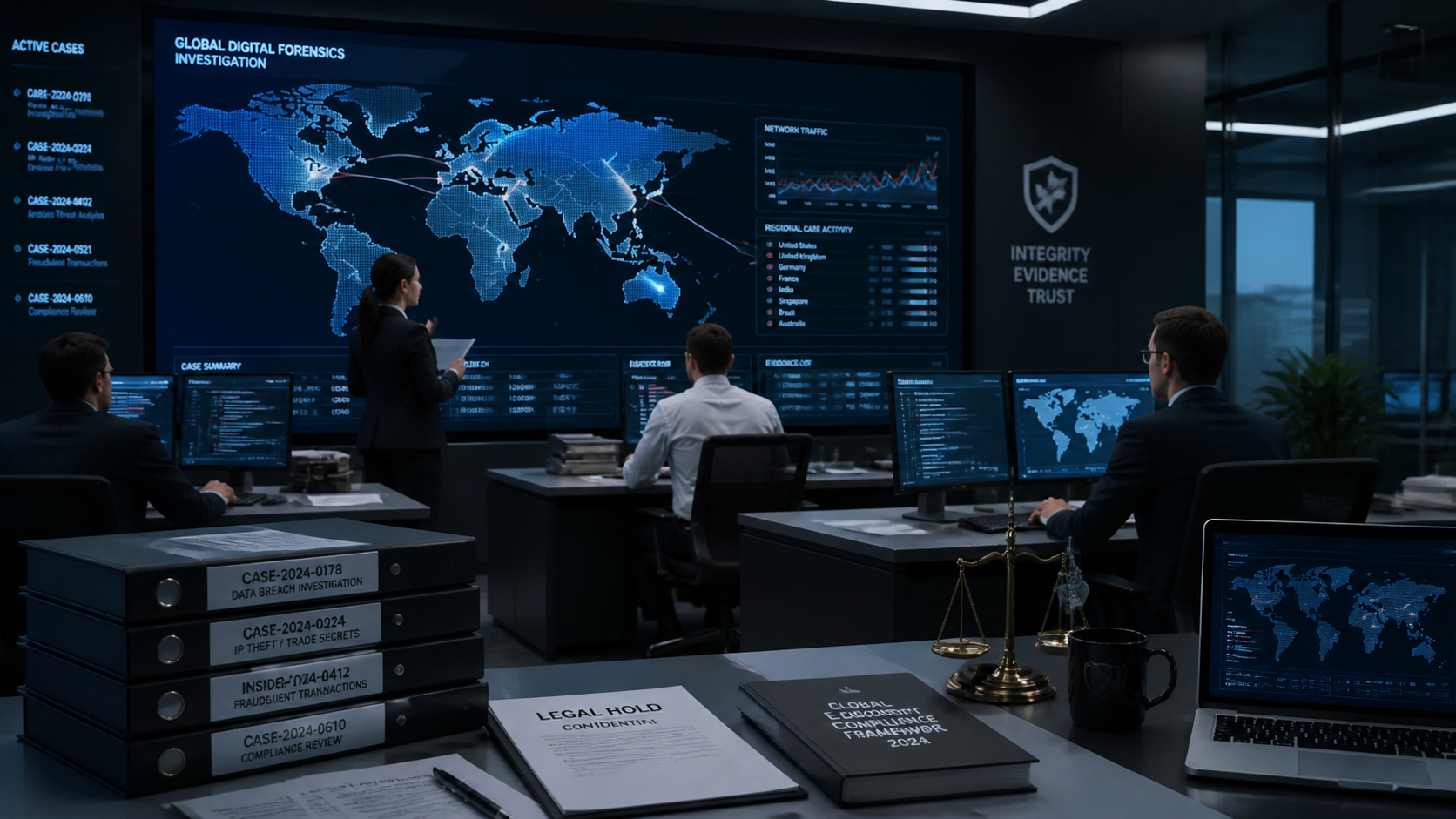
In an increasingly digital world, corporations and legal teams face the challenge of navigating complex digital landscapes during investigations.
This guide delves into the core principles of global digital forensics, highlighting the essential strategies and tools necessary for effective investigations in 2026. Readers will learn about the significance of cyber forensic analysis, the challenges of managing digital evidence across borders, and the role of international agencies in facilitating these investigations.
As organizations grapple with issues like data privacy and compliance, understanding these elements becomes crucial for successful outcomes.
This article will also explore how advancements in technology, particularly AI, are reshaping the landscape of digital forensics, providing insights into best practices and essential tools for effective investigations.
What Are the Core Principles of Corporate Digital Forensics in 2026?
Corporate digital forensics in 2026 is grounded in several core principles that ensure the integrity and effectiveness of investigations.
These principles include the secure handling of evidence, meticulous documentation, and the use of forensically sound tools. By adhering to these guidelines, organizations can maintain the chain of custody and ensure that digital evidence is admissible in court.
How Does Cyber Forensic Analysis Support Corporate Investigations?
Cyber forensic analysis plays a pivotal role in corporate investigations by enabling the controlled acquisition of evidence. This process involves techniques such as hashing to ensure data integrity and timeline reconstruction to establish a sequence of events.
By employing these methods, investigators can uncover critical information that supports legal proceedings and internal audits. The ability to analyze digital footprints allows organizations to respond effectively to incidents and mitigate potential risks.
What Are the Key Challenges in Managing Digital Evidence Across Borders?

Managing digital evidence across borders presents unique challenges that organizations must navigate. Key issues include:
- Data Privacy Regulations: Different countries have varying laws regarding data protection, which can complicate evidence collection.
- Legal Privilege and Jurisdiction: Determining which laws apply can be challenging when evidence spans multiple jurisdictions.
- Cultural and Language Barriers: These factors can hinder communication and collaboration between international teams.
Understanding these challenges is essential for corporations to develop effective strategies for cross-border investigations.
Further emphasizing the complexities, recent research highlights specific legal challenges in cross-border cloud forensic investigations and the critical need for international cooperation.
Cross-Border Cloud Forensics & International Cooperation
The rapid rise of cloud computing has reshaped data storage and crime, shifting investigations to digital forensics. Jurisdictional complexities, dispersed data, and lack of server access hinder cross border cloud forensics, while no unified international legal framework allows cybercriminals to find safe havens and blocks admissible evidence preservation. This study aims to analyse the legal challenges hindering effective cross-border cloud forensic investigations and propose strategies for international cooperation.
Investigating the Legal Complexities of Cloud Forensic Investigations in Cross-Border Scenarios and Developing Strategies for International Cooperation, 2026
How Do Cross-Border Investigations Enhance International Fraud Detection?
Cross-border investigations significantly enhance international fraud detection by leveraging digital forensics and transactional analytics. These investigations allow for the identification of patterns and anomalies that may indicate fraudulent activities. AI-assisted anomaly detection further improves the accuracy of these investigations, enabling teams to uncover hidden connections and illicit activities.
By fostering cross-border cooperation, organizations can share intelligence and resources, leading to more effective fraud prevention strategies.
Global Intelligence Consultants, Inc. provides corporations and legal teams with specialized digital forensics and corporate investigation consulting, helping them uncover, preserve, and analyze electronic evidence across computers, smartphones, and other devices to manage fraud and litigation risk more effectively.
What Legal and Compliance Standards Govern International Investigations?
International investigations are governed by a complex framework of legal and compliance standards. Key considerations include:
- Data Privacy Regulations: Organizations must comply with local and international data protection laws, such as GDPR.
- Chain of Custody: Maintaining a clear chain of custody is crucial for the admissibility of evidence in court.
- Cross-Border Cooperation: Legal frameworks often require collaboration between jurisdictions to ensure compliance and effective evidence handling.
Understanding these standards is vital for corporations to navigate the legal landscape effectively.
Which International Agencies Facilitate Cross-Border Digital Forensics?
Several international agencies play a crucial role in facilitating cross-border digital forensics, including:
- INTERPOL: Provides a platform for international police cooperation and information sharing.
- Europol: Supports EU member states in combating serious international crime and terrorism.
- FBI: Offers assistance in investigations involving U.S. interests and international partners.
These agencies help streamline the process of gathering and analyzing digital evidence across borders.
How Does AI-Generated Evidence Impact Global Digital Forensics Investigations in 2026?
AI-generated evidence is reshaping global digital forensics investigations by introducing new challenges and opportunities. The validity of AI-generated evidence raises legal considerations regarding its admissibility in court. As forensic methodologies evolve, investigators must adapt to these changes, ensuring that they can effectively analyze and authenticate AI-generated data. This shift necessitates ongoing training and development for legal teams and forensic experts.
How to Identify and Authenticate AI-Altered Evidence in Litigation
Identifying and authenticating AI-altered evidence in litigation requires a systematic approach. Key guidelines include:
- Challenges in Authentication: Understanding the limitations of current technologies in verifying AI-generated content.
- Legal Standards for AI Evidence: Familiarizing oneself with the evolving legal landscape surrounding AI-generated evidence.
- Best Practices for Validation: Implementing robust validation processes to ensure the integrity of evidence.
These practices are essential for legal teams to navigate the complexities of AI in the courtroom.
In this evolving landscape, the authentication of video evidence, particularly with the rise of generative AI, presents a significant challenge for legal teams.
Generative AI & Video Evidence Authentication for Legal Teams
The legal system struggles with verifying video evidence, necessitating forensic specialists skilled in identifying AI-altered material. Blockchain technologies are also being explored for video authentication.
Generative AI and Its Implications for the Authenticity and Legal Use of Video Evidence, 2025
How Do Private Intelligence Firms Handle Deepfake and Synthetic Media in Cross-Border Cases?
Private intelligence firms are increasingly tasked with managing deepfake and synthetic media in cross-border cases. Their strategies include:
- Detection Methods: Utilizing advanced technologies to identify manipulated content.
- Legal Implications: Understanding the potential legal ramifications of using deepfake evidence in investigations.
- Case Studies: Analyzing previous cases to develop effective response strategies.
These firms play a critical role in ensuring that digital evidence remains credible and reliable.
What Are the Best Practices for Implementing Global Digital Forensics Investigations?
Implementing global digital forensics investigations requires adherence to best practices, including:
- Establish Clear Corporate Policies: Organizations should develop comprehensive policies that outline procedures for digital investigations.
- Maintain Chain of Custody: Ensuring that all evidence is properly documented and secured is essential for legal compliance.
- Conduct Regular Compliance Audits: Regular audits help identify potential gaps in compliance and improve overall investigation processes.
These practices are vital for organizations to conduct effective and legally sound investigations.
Which Tools and Technologies Are Essential for Effective Digital Forensics?
Effective digital forensics relies on a variety of tools and technologies, including:
- Forensic Software Tools: Essential for data recovery and analysis.
- Data Recovery Technologies: Critical for retrieving lost or deleted information.
- Evidence Management Systems: Help streamline the organization and presentation of digital evidence.
Utilizing the right tools enhances the efficiency and effectiveness of forensic investigations.
How Should Corporations Ensure Confidentiality and Compliance During Investigations?
To ensure confidentiality and compliance during investigations, corporations should:
- Establish Clear Corporate Policies: Define protocols for handling sensitive information.
- Utilize Encrypted Communications: Protect data integrity and confidentiality through secure communication channels.
- Coordinate with Legal Counsel: Involve legal experts to navigate compliance issues effectively.
These strategies are essential for maintaining the integrity of investigations while protecting sensitive information.
As digital evidence, AI-generated content, and cross-border risks become more complex, corporations and legal teams need an experienced global investigations partner they can trust.
Global Intelligence Consultants, Inc. provides discreet, court-ready digital forensics and international investigative support worldwide. To discuss a current matter or plan proactive strategy, contact our team today.