
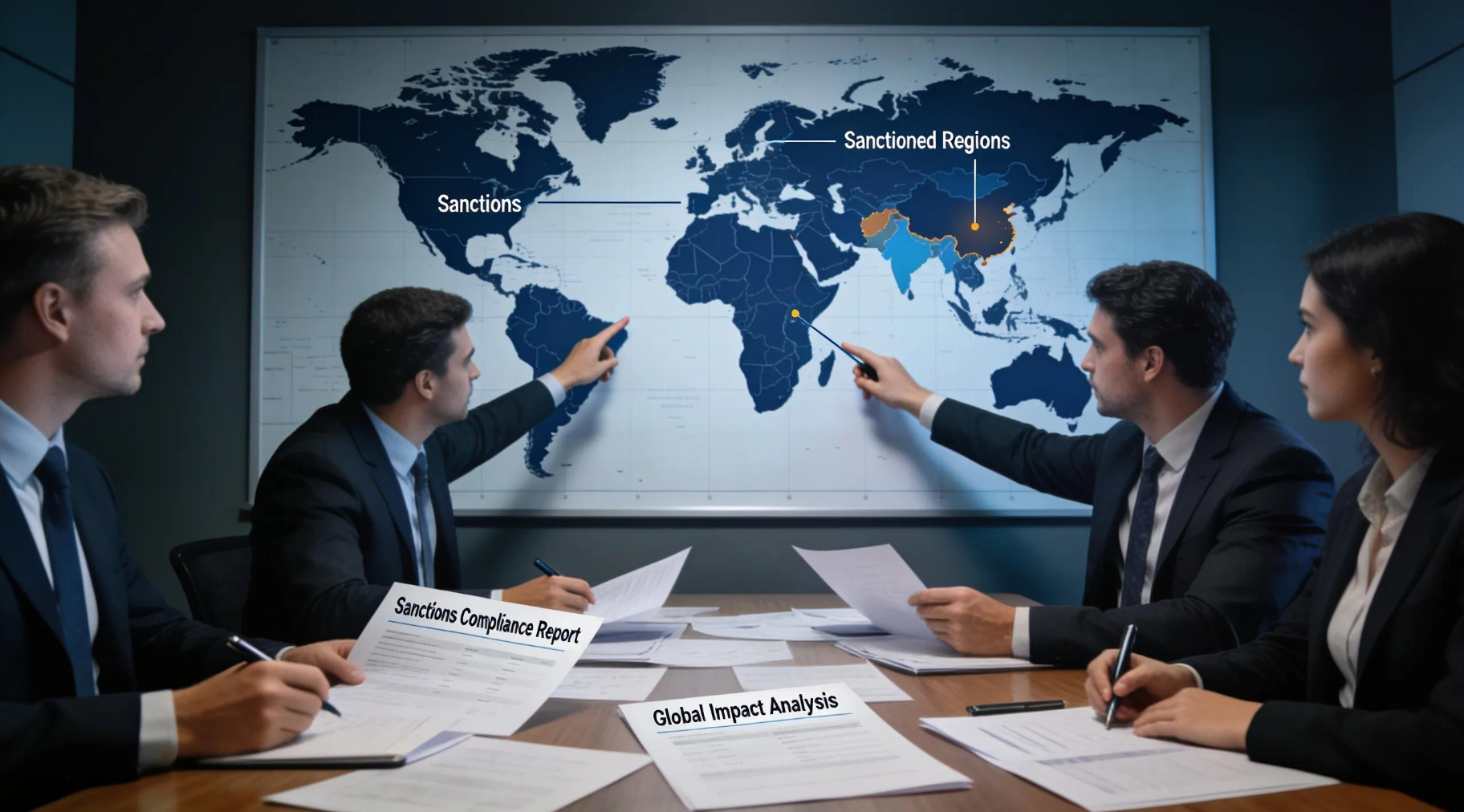
Navigating the increasingly complex landscape of international sanctions is a major challenge for corporations in 2026. Global geopolitical shifts and shifting regulatory environments demand that companies remain vigilant and responsive.
This comprehensive guide will delve into key aspects of international sanctions compliance, the authorities involved, and the impact of economic sanctions on cross-border trade.
Additionally, we will explore how global intelligence can enhance corporate risk management strategies, best practices for compliance, and the expected challenges in cross-border operations. For businesses looking to thrive amid these constraints, adeptly intertwining risk management measures and compliance tactics will be essential.
What Are the Key International Sanctions Regimes Affecting Corporations in 2026?
International sanctions regimes are mechanisms established by countries to influence the behavior of states and entities by imposing penalties or restrictions. In 2026, the key sanctions regimes include those imposed by the United States, the European Union, and other nations, each with distinct implications for businesses operating on a global scale.
Understanding these regimes is crucial for corporate compliance teams to navigate the risks associated with global operations. The following aspects outline critical elements to consider:
- US Sanctions: These are often the most stringent and can have extraterritorial reach, affecting businesses worldwide.
- EU Sanctions: Designed to uphold foreign policy goals, EU sanctions may differ significantly from US sanctions, leading to complexities in compliance.
- Regional Challenges: Corporations must be aware of localized sanctions in different regions, especially in politically volatile areas that may impose additional compliance burdens.
Navigating these sanctions is imperative for maintaining operational integrity and avoiding significant legal repercussions.
Which regulatory authorities enforce global sanctions?
Various regulatory agencies are responsible for enforcing sanctions on both national and international levels. Understanding the key players is essential for compliance. The main authorities include:
- United States Treasury Office of Foreign Assets Control (OFAC): This agency administers and enforces economic sanctions against targeted foreign countries and regimes.
- European Commission: Oversees the implementation of EU sanctions and liaises with member states to ensure compliance.
- United Nations Security Council: While not a regulatory body in the traditional sense, it establishes international sanctions that member states are obligated to enforce.
These authorities are pivotal in guiding and enforcing compliance, making it critical for corporations to stay informed about their mandates and operational changes.
How do economic and financial sanctions impact cross-border trade?
Economic and financial sanctions can significantly hinder cross-border trade by limiting access to markets, resources, and financial systems. Corporations are often faced with multiple challenges stemming from these sanctions, including:
- Trade Restrictions: Sanctions may restrict the import and export of certain goods and services, complicating supply chain logistics.
- Increased Costs: Compliance measures often translate into higher operational costs, from legal consultations to adjustments in supply chains.
- Legal Repercussions: Non-compliance can lead to hefty fines and restrictions, making adherence to sanctions critical for long-term operational viability.
In light of these impacts, effective compliance strategies must be developed to mitigate risks in international trade.
To further illustrate the tangible effects of these policies, consider a comprehensive study on the subject.
Trade Sanctions and Export Control’s Impact on Global Business
In an era of escalating geopolitical tensions, trade sanctions and export control laws have emerged as pivotal instruments of economic statecraft, profoundly disrupting global business operations. This mixed-methods study investigates their multifaceted impacts across technology, energy, and manufacturing sectors, drawing on primary data from surveys and interviews with executives from over 50 multinational corporations and small-to-medium enterprises, complemented by secondary analysis of OFAC, UN, WTO, and UN Comtrade databases. The Impact of Trade Sanctions and Export Control Laws on Global Business Operations, 2025
How Does Global Intelligence Enhance Sanctions Risk Management for Corporations?
Global intelligence is an invaluable resource that enhances a corporation’s ability to comply with sanctions by providing vital insights and data on emerging risks and compliance needs. The integration of global intelligence into corporate risk management offers several advantages:
- Enhanced Sanctions Screening: By utilizing global intelligence tools, corporations can better assess potential risks associated with business partners and transactions, enhancing compliance efforts.
- Proactive Risk Mitigation: Intelligence gathering allows companies to identify potential challenges before they escalate, enabling proactive adjustments to business strategies.
- Tailored Compliance Strategies: Leveraging global intelligence can help corporates develop compliance programs that are tailored to specific market conditions and regulations.
Through the strategic use of global intelligence, corporations can proactively navigate the complexities of international sanctions.
What global intelligence tools support sanctions screening and due diligence?
Numerous tools facilitate sanctions screening and due diligence, including:
- Comprehensive Data Platforms: These integrate various data sources, including government databases, to provide real-time updates on sanctions.
- Risk Assessment Software: Solutions that assess potential risks associated with partners and clients based on global sanctions data.
- Due Diligence Frameworks: Tools that provide structured approaches for vetting partners and ensuring compliance with regulations.
Employing these tools strengthens a corporation’s approach to managing sanctions risk while bolstering due diligence protocols.
How can intelligence gathering methodologies mitigate compliance risks?
Intelligence gathering methodologies play a crucial role in minimizing compliance risks by offering actionable insights. Key methodologies include:
- Real-Time Intelligence Monitoring: Regular updates on global events and sanctions enable corporations to stay ahead of compliance obligations.
- Collaboration with Local Experts: Engaging local entities familiar with regional regulations can provide deeper insights into compliance needs.
- Utilization of Data Analytics: Advanced analytics can uncover patterns and trends that affect compliance, thus guiding corporate strategy.
These methodologies provide a systematic way to enhance global compliance efforts.
What Are Best Practices for Corporate Compliance Strategies to Navigate Sanctions in 2026?
As the regulatory landscape continues to evolve, adopting best practices for corporate compliance in navigating sanctions is essential. Key strategies that can enhance compliance include:
- Engaging with Local Counsel: Collaborating with local legal experts can help ensure compliance in diverse markets.
- Implementing Regular Risk Assessments: Continuous risk assessments can help corporations identify vulnerabilities and adapt their compliance strategies accordingly.
- Leveraging Technology: Utilizing advanced technological solutions can streamline compliance processes and enhance accuracy in screenings.
Employing these best practices can establish a robust compliance framework that protects corporations against potential risks.
How should corporations establish effective sanctions compliance programs?
Creating effective sanctions compliance programs requires a structured approach that addresses the complexities of global operations. Consider the following steps:
- Develop Comprehensive Frameworks: Establish clear frameworks that define how sanctions compliance will be integrated into corporate governance.
- Regular Employee Training: Ongoing training programs should educate employees about sanctions regulations and compliance procedures.
- Frequent Audits and Updates: Routine audits of compliance protocols can uncover gaps and facilitate necessary updates.
These steps are vital in establishing a proactive sanctions compliance program.
Which risk management and due diligence processes strengthen compliance?
Effective risk management and due diligence processes are essential for enhancing compliance. Important processes include:
- Detailed Risk Assessments: Conducting thorough evaluations of potential partners and transactions to identify compliance risks.
- Continuous Monitoring: Implementing measures for ongoing monitoring of business relationships and market developments.
- Documented Compliance Protocols: Maintaining detailed documentation of compliance measures, decisions, and policies.
Strengthening these processes helps build a resilient compliance system, capable of adapting to regulatory changes.
In particular, the maritime industry presents unique challenges and requires specialized compliance frameworks.
Maritime Sanctions Compliance: Risk Management and Intelligence Frameworks
The study analyzes how layered evasion tactics, such as AIS manipulation, unclear ownership structures, document falsification, and irregular routing, undermine fragmented compliance frameworks. It argues that effective maritime security requires a holistic, risk-based approach integrating vessel identification, ownership analysis, cargo and route assessment, supply-chain due diligence, and continuous monitoring. The paper concludes that while sanctions enhance accountability, they also incentivize adaptive evasion networks. Robust, intelligence-led compliance frameworks are therefore essential to mitigating legal, financial, and strategic risks while safeguarding the integrity of global energy and maritime trade systems. Securing Energy Transportation at Sea: Sanctions, Maritime Risk, and Strategic Compliance, 2025
What Cross-Border Compliance Challenges Should Corporations Expect and How Can They Adapt?
As globalization increases, corporations must anticipate and adapt to significant cross-border compliance challenges that arise from international sanctions. Key challenges include:
- Regulatory Changes: Evolving legal frameworks can introduce new compliance requirements and risks.
- Increased Complexity: The intertwined nature of global commerce often results in complex compliance scenarios.
- Geopolitical Events: Fluctuating geopolitical dynamics can rapidly change the sanctions landscape, impacting many regions.
Adapting to these challenges requires flexibility and readiness to update compliance strategies accordingly.
How do geopolitical events complicate sanctions compliance worldwide?
Geopolitical events can create unexpected friction points that complicate sanctions compliance as new regimes or mandates are enacted. For instance, shifts in government, economic crises, or heightened tensions often lead to the rapid imposition or revision of sanctions. Corporations that remain receptive to these changes can adjust their compliance strategies more effectively, safeguarding their international interests.
What technologies can corporations deploy to address cross-border sanctions challenges?
Numerous technologies exist to assist corporations in effectively managing cross-border sanctions challenges. Key technologies include:
- Blockchain Technology: This offers unprecedented traceability in transactions, helping firms ensure compliance.
- Artificial Intelligence Systems: AI can analyze large datasets to detect and predict compliance risks related to global sanctions.
- Data Analytics Tools: Utilizing big data analytics, corporations can make informed, proactive compliance decisions.
Deploying these technological solutions can enhance compliance efforts, mitigate risks, and protect corporate interests in a complex global marketplace.
Whether a corporation is entering a new market, vetting a high-value counterparty, or reassessing an existing relationship in light of recent designations, GIC provides the clarity and confidence needed to proceed — or to walk away before risk materializes.
To discuss how Global Intelligence Consultants can support your organization’s sanctions compliance and risk management strategy, contact GIC at info@gicagency.com, call (888)-714-9411, or visit gicagency.com.